May 4, 2012

Debut album by Jiminy Finn and the Moneydiggers!


I'm pleased to announce the official release of the new album, "Campfire Carols," by Jiminy Finn and the Moneydiggers!


Tracklist:

1. Into the Woods
2. Lo Que Sea
3. I Guess I Want To Be With You
4. I've Got to Write a Song Tonight
5. Yes, I'm a Music Snob (What of it?)
6. Universal Love Song
7. All Day Every Day (Beatmaster)
8. We're Sticking it to the Man, He Just Doesn't Know it Yet
9. How Happiness Destroyed My Band
10. Before You Came
11. Frankie's House
12. The Shameless Self-Promotion Song
13. Dennis
14. Hidden/Bonus Track: Paul Revere

Click here to download the free mp3 of "I've Got to Write a Song Tonight." And dance. 

Enjoy a few low-quality excerpts below to give you a taste for the goodness of this compilation. Of course, the actual tracks sound much better.


Buy it now for a mere $10 (+shipping), secured through paypal:


Check us out at facebook.com/themoneydiggers. We're just a couple of guys who are up to pure good. Started making music in the neighborhood. 

April 21, 2012

New Album from Jiminy Finn and the Moneydiggers!


I'm pleased to announce the official release of the new album, "Campfire Carols," by Jiminy Finn and the Moneydiggers!


Tracklist:

1. Into the Woods
2. Lo Que Sea
3. I Guess I Want To Be With You
4. I've Got to Write a Song Tonight
5. Yes, I'm a Music Snob (What of it?)
6. Universal Love Song
7. All Day Every Day (Beatmaster)
8. We're Sticking it to the Man, He Just Doesn't Know it Yet
9. How Happiness Destroyed My Band
10. Before You Came
11. Frankie's House
12. The Shameless Self-Promotion Song
13. Dennis
14. Hidden/Bonus Track: Paul Revere

Enjoy a few low-quality excerpts below to give you a taste for the goodness of this compilation. Of course, the actual tracks sound much better.


Buy it now for a mere $10 (+shipping), secured through paypal:


Check us out at facebook.com/themoneydiggers. We're just a couple of guys who are up to pure good. Started making music in the neighborhood. 

April 20, 2012

Help Us Raise Money to Fight ALS

Pardon this intrusion to my regular blogging fare. I'm posting a letter written by Kristen, my spouse. Late last year her mother Vicki was diagnosed with ALS, commonly called Lou Gehrig's Disease. We're participating in a fundraiser for research toward a cure and need your help.

Dear Family and Friends,

As some of you already know, and some are just now learning, my mom Vicki Ullrich was diagnosed with ALS (commonly referred to as Lou Gehrig's disease) in October 2011. This is a cruel and fatal disease, and because so few people are diagnosed with it (about 2 people out of 100,000), there has not been as much research surrounding its causes and there is no known cure.

I'm doing something really exciting to do my part to further ALS research, and I hope you will consider helping me! My husband Blair and I recently signed on to help raise funds to support the Robert Packard Center for ALS Research at Johns Hopkins by participating in the 6th Annual Fiesta 5K and Walk on May 5, 2012. I hope that you can help support me in this important project by contributing whatever you can.

Funds raised from the Fiesta 5K will be dedicated to aggressive scientific research focused on understanding the causes of ALS, investigating effective treatments for it, and finding a cure. Every dollar makes a difference. It is easy to make a donation online using the link below. Whatever you can give will help - it all adds up! I greatly appreciate your support and will keep you posted on my progress. For more information about this volunteer fundraiser and its programs, you can visit the Web site.

If you know my mom from church, school, work, or anywhere else, you probably know her as a thoughtful and dedicated single mother, teacher, and friend. She is the type of person who loves working on projects, being on-the-go, traveling, and normally doesn't sit still for very long. This disease has completely changed her life in a matter of months. My hope is to aid ALS research so that fewer people in the future, whether patients or their family members, have to face such a diagnosis.

Sincerely,

Kristen Ullrich Hodges

To make a donation online, click here to visit my personal page.

If the text above does not appear as a clickable link, you can visit the web address:
http://support.alscenter.org/site/TR?px=1125869&pg=personal&fr_id=1100&et=CPQaF4eSJjHLPlTJxY9RAQ&s_tafId=4010


Click here to view the team page for Team Ullrich

If the text above does not appear as a clickable link, you can visit the web address:
http://support.alscenter.org/site/TR?team_id=4210&pg=team&fr_id=1100&et=SusDwU0XlyNDKkSbJqZ6BQ&s_tafId=4010

March 20, 2012

What has the “Joseph Smith Papers Project” to do with Islam?


Or, “an ode to invested Latter-day Saint history”
***
Yesterday, various bloggers and writers were invited to a meeting with the editors of the most recent volume of the Joseph Smith Papers Project to discuss the new “Histories” volume. This post is partially a reflection on that event, and you can expect other blog posts and reviews to come.
***

In a revelation dictated on the day of his church’s founding, Smith reported God’s command: “there shall be a record kept among you.”1 And so it was; with various fits and starts the early Saints strove to fulfill what they took to be a divine mandate. Mormon history, from the very beginning, was invested. It was Mormon history. Much of our earliest material was recorded under the dictation, direction or influence of Joseph Smith. It doesn’t take a genius or a meticulous historian to recognize that such records will carry deeply impressed fingerprints of the personalities, prejudices, and perspectives of those doing the recording. And such records are invested.

You might sense a problem with this. We want people to simply tell it like it is, enough cheerleading, tell the truth, lay everything bare. However, I’m suggesting that those who complain loudest about the obviously-partisan nature of official accounts might find it more fruitful to deeply consider the initial impulses behind the records Mormons kept. Why did they record this and not that? What are they focusing on, and what seems to escape their gaze altogether? Invested history won’t often provide distanced, dry, meticulous, disconnected accounts though the stuff from which it is crafted might very well seem less-than-exciting. I’m asking you instead to conceive of our earliest historical accounts with close attention to their context. Such accounts include personal witnesses of spiritual experiences (visions of the heavens, visitations from heavenly beings), shot through with political, economic, and social concerns. Words like “bias” and “objectivity” should give way to words like “perspective” and “values.”

Perhaps this is the grand secret of understanding Mormon history! The records are imperfect—sometimes quite foreign—ranging from the boring to the majestic, encompassing the mundane, the marvelous, and even the over-the-top. And the gaps, oh! those damnable gaps! and the hints at records now lost, probably forever, to the ravages of the moth or flame!

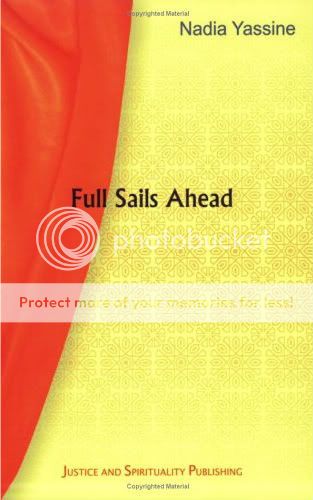
So, what does this have to do with Islam? I recently read an interesting book called Full Sails Ahead by a Moroccan Muslim scholar/activist named Nadia Yassine. Billed as a “frank examination of Islamic history and critical assessment of the relation between Islam and…the past,” the book enacts the author’s understanding of the importance of historical perspective for religious faith. Part of the reason contemporary Muslim countries have witnessed scientific, political, and cultural decline to various degrees is because they are not living true to the best in their history, she argues. And this isn’t entirely their fault, as some of their early recorded history is imperfect. Toward the conclusion of her book Yassine takes a moment to describe the early Islamic “chronicler,” who in the 600s AD recorded a “flat image of the facts”:

It is true that when you read history in the records of the great chroniclers like Tabari, for instance, you feel a certain annoyance before this monotonous delivery of accounts that are not linked by any main theme or historical framework. Fragmented chronicles for a fragmented history!
We thus inherit an accumulation of impersonal accounts of unequal importance yet presented on the same scale of value. In the same detached style, for instance, we are informed that Sukayana…had very beautiful hair and that her father’s head was slit by Yazid Ibn Mu’awiya. Such unflappability, as we might call it, in the face of events produces an uninteresting and impersonal history, wanting in the power of events. So flat and blurred are its accounts that the fleeting periods of time it attempts to capture seem easily interchangeable.2

“Fragmented chronicles for a fragmented history” indeed! Upon reading this excerpt I immediately thought of the most recent "Journals" volume (2) of the Joseph Smith Papers Project. It covers December 1841-April 1843. The volume’s editors describe this as “a seventeen-month period marked by the continued growth of the church, significant doctrinal developments, the ongoing settlement of the Nauvoo community, and the maturing of Joseph Smith as a political and religious leader.” As for the journals, they “note both the momentous and the mundane,” and it could be easy to slip into detecting the sort of one-dimensional “unflappability” Yassine has noticed in early Islamic chronicles.3 Multiple entries noting that Joseph spent the day chopping wood or snow sledding with his son are recorded alongside accounts of doctrinal debates he had about the Millerites, exhortations to complete the Temple and Nauvoo House, letters written to the Illinois Governor, sketches of real-time astronomical events interpreted as signs of the end times, and fragmentary sermon excerpts. Most readers aren’t likely to sit down and read this one straight through—especially those bored by accounts of selling property, legal proceedings, and medical malpractice. But this fragmentary record is immensely valuable, a strange combination engulfing the personal and the impersonal.

If the “Journals” volumes represent more of the fragments and scraps of our past, we also have a wealth of early Mormon documents which draw upon that chaos to make order. Yassine complained of the “monotonous delivery of accounts that are not linked by any main theme or historical framework” in early Islamic chronicles. Our early Church made efforts to provide just such a framework, much to our appreciation and despite our ongoing uneasiness with partisan and selective nature of the records. The history they recorded is invested, and we’re glad! Enter the newest volume in the ongoing papers series: Histories, Volume 1: Joseph Smith Histories, 1832–1844.

This new volume presents “the six personal and church histories written, dictated, or closely supervised by Joseph Smith” prior to his death.4 Early Latter-day Saints sought to give explicit narrative shape to their experiences as they understood them. They self-published narratives in Church newspapers, pamphlets and books. Near the end of his life, Joseph Smith provided a narrative overview to Daniel Rupp, who compiled an encyclopedia called An Original History of the Religious Denominations at Present Existing in the United States (Philadelphia, 1844). This account drew on the earlier Wentworth Letter, which in turn drew on Orson Pratt’s “Remarkable Visions” pamphlet, which in turn drew from other accounts. This regress of reference is being untangled as more and more records are being meticulously transcribed and published for the Joseph Smith Papers Project, giving us easier, more intimate, and unprecedented access to our early church history.

While leafing through these records a variety of questions should fill our minds. One prominent question of late goes something like this: “Does this match what I remember being taught in Sunday School lessons and Seminary, or reading in official Church manuals?” The folks who teach your classes, the folks who’ve written various official works, most of them are simply doing their best to inculcate in us a sense of belonging to a divine community, to impress on us the moral obligations such membership entails. When this question (somewhat frequently) returns to nag me I try to situate it alongside other questions which I’ve come to understand to be just as crucial, if not more-so:

Why was this record created? When? By whom? For whom? How was it influenced by other records, and what other records were influenced by it? What is highlighted in this record? What is left out? What do these things tell me about the things this writer valued? Which of my questions are likely to be similar to ones that would have made sense to them? Which questions might they have been asking that I haven’t considered?

These aren’t always the questions we encounter in everyday Church meetings, but they can be valuable, and not merely for historical reasons. These are the sorts of questions I had in mind when I said that words like “bias” and “objectivity” should give way to words like “perspective” and “values.” To paraphrase the grandfather of a young man who was once bitten by a radioactive spider, thus acquiring super-human abilities to swing around tall buildings hanging from webs which he shoots from his wrists, “With great access comes great responsibility”. And I would add, great opportunity. There is power in our history. There is power in history, generally. This is why Yassine’s plea to her fellow Muslims is so heavily-grounded in the Islamic past. This is why she pleads with her people to avoid the dichotomy between either ignoring the embarrassing and inconvenient on one had, or losing all confidence and magnifying the warts on the other:

The perception we have of our history ought to be gathered around a methodological analysis that is likely to give us a meaning, stimulating thus in ourselves a need to find our way back [to those better times] again. The best way to regain the summit is to know the paths of descent.5

Latter-day Saints are a history-loving people, but the history we love best ofttimes is the history we find most comfortable to our 21st century sensibilities. The Joseph Smith Papers Project, that remarkable product of our official Church History department, seeks to place all the cards we have on the table. The “documents created by Joseph Smith or by staff whose work he directed, including journals, revelations and translations, contemporary reports of discourses, minutes, business and legal records, editorials, and notices. The project also includes papers received and ‘owned’ by his office, such as incoming correspondence.”6 Early Mormons were invested; that’s why they wrote this stuff. That’s why the stuff they wrote was permeated by that investment. Present Mormons are invested; that’s why the Church publishes this stuff. That’s why we read this stuff. Remember that the story doesn’t tell itself. From the chaos—be it in the form of handwritten journals, newspaper publications, books, and other materials—historians/readers seek to create a bit of order, to add a narrative scope, to tell our invested Mormon stories.


Footnotes:

1. See Revelation, 6 Apr. 1830, in Doctrine and Covenants 46:1, 183 ed. [D&C 21:1]. Dean C. Jessee, Mark Ashurst-McGee, and Richard L. Jensen, eds. Journals, Volume 1: 1832–1839, vol. 1 of the Journals series of The Joseph Smith Papers, edited by Dean C. Jessee, Ronald K. Esplin, and Richard Lyman Bushman (Salt Lake City: Church Historian’s Press, 2008), xxxv.

2. Nadia Yassine, Full Sails Ahead (Iowa City: Justice and Spirituality Publishing, 2006), 206.

3. “Volume 2 Introduction,” Andrew H. Hedges, Alex D. Smith, Richard Lloyd Anderson, eds., Journals, Volume 2: December 1841-April 1843, vol. 2 of the Journals series of The Joseph Smith Papers, edited by Dean C. Jessee, Ronald K. Esplin, and Richard Lyman Bushman (Salt Lake City: Church Historian’s Press, 2011), xiii, xxxi.

4. ”Published Volumes,” josephsmithpapers.org/publishedVolumes (accessed 20 March 2012). The six histories that Joseph Smith personally wrote, dictated, or supervised includes: History, circa Summer 1832; History, 1834-1836; History Drafts, 1838-circa 1841; ”Extract, from the Private Journal of Joseph Smith Jr.,” July 1839; ”Church History” (familiarly known as the “Wentworth Letter”) 1 March 1842; ”Latter Day Saints,” 1844. Also, Appendix: Orson Pratt, A[n] Interesting Account of Several Remarkable Visions, 1840.

5. Yassine, Ibid. As you guessed by now, this post’s title was partly a ploy to draw your interest. But Yassine’s observations on the importance of history, and her attention to the nature of recorded history and how that nature affects our present circumstances, contain the main point I hope to communicate here.

6. “About the Project,” josephsmithpapers.org/aboutTheProject (accessed 20 March 2012).

February 14, 2012

Review: Molly C. Haslam, “A Constructive Theology of Intellectual Disability”


Title: A Constructive Theology of Intellectual Disability: Human Being As Mutuality and Response
Author: Molly C. Haslam
Publisher: Fordham University Press
Genre: Theology
Year: 2012
Pages: 134
Binding: Paperback
ISBN13: 978-0-8232-3941-2
Price: $24.00

Here’s another (perhaps over-long) review. For busy folks I've included a little synopsis of the review:

SYNOPSIS: Theologian/physical therapist Molly Haslam claims that Christian theology is biased by defining “human being” according to things like agency, rationality, and intelligence. Such anthropologies marginalize people with profound intellectual disabilities. She describes several recent attempts to account for the disabled in Christian theology. They’re inadequate for her because they still seem to privilege the rational self. She seeks to construct a theology which explains how people with severe intellectual disabilities can be seen as being created in the image of God. Her account is excellent despite a few blind spots, and it has interesting implications for how a Mormon theology of intellectual disability might look. Above all, it very fruitfully invites you, good reader, to think about what it means to be human.

Now for the full review.

Chan was born with cerebral palsy. At age twenty he functions with an IQ level of about 20—somewhere near the level of an infant. He can’t roll over or hold his head upright. It seems he can’t understand or produce words or sentences, nor can he use or interpret gestures. It also seems Chan can’t self-reflect, symbolize a goal, or act with intention to achieve one. His caregivers describe his behavior as being alternately “awake oriented” and “sleep oriented.” They try to discern patterns when Chan exhibits such behaviors. They look for messages in eye movement, heart rate, and muscle tension. They believe Chan acts at a “preintentional” level; that he responds to the world around him without conscious intention and the world around him can in turn respond to him. Molly C. Haslam, a physical therapist and theologian, turns to Chan and other people with “profound intellectual disabilities” to better understand what it means to be human (57-65). What can Chan tell us about who we are, about who God is, and about our relationships to each other? Those questions are the main theme of Haslam’s A Constructive Theology of Intellectual Disability.

With the rise of a disability rights movement over the past hundred and fifty years, various “models” have been created to frame disability. The “vocational model” sees disability in terms of impact on ability to work, thus measures are taken to provide education, training, and job opportunities for the disabled. The “medical model” has promoted “important medical advances,” but “professional control” often wins out over “empowerment of the individual” (10). The “minority group model” tries to overturn societal barriers against and stigmatization of the disabled. This model has been useful in helping Haslam identify ways which “our theological categories perpetuate this stigmatization,” but she believes it misses complexity—”individuals with disabilities experience disability differently” (11). Thus, one more model, the “limits model,” is helpful for Haslam’s purposes. It emphasizes that embodiment is multifaceted, it “begins with the notion of limits as a common, indeed quite unsurprising, aspect of being human.” Everyone has limits in varying degrees (12). Using these last two models, Haslam explains how “our theological categories perpetuate the stigmatization” the intellectually disabled because they fail “to account for the full humanity of these individuals” (13).

According to Haslam, Christian theology has usually defined humans in substantialist terms. ”Christianity came to life in a culture infused with Neoplatonic philosophy and its privileging of the world of ideas over the material world” (14). A person’s intellect matters more than their body (Aquinas, Calvin). Several recent theologians have recognized this bias which places human nature on the “inside” (Reynolds, Yong, Reinders). In order to account for human disability they try an “outside” approach by defining humanity in relational terms. A person is a human in that they are created, recognized or accepted as such by God or caregivers. Haslam sees these new attempts as a “hopeful sign” (3), but not good enough. They either define humans as utterly passive, thus not reflective of an active God (and we’re supposed to be “created in his image”), or they still locate humanity in a particular capacity: a person’s agency, the ability to understand one as a differentiated self, a being capable of symbolic or goal-directed behavior, understanding oneself as loved by another.

In part one Haslam explains and argues against Gordon Kaufman‘s view of the human as “intellectual agent” (19-35) and in part two she does the same for George Lindbeck‘s view of human being as “language user” (36-52). Throughout the rest of the book Haslam seeks to construct a view of humans which is “life-giving” even for the intellectually disabled, something she argues the other accounts fail to do:

Rather than turn ‘inside’ the self and ground our concept of human being in a particular capacity, or rather than turn ‘outside’ the human being and construct a theological anthropology based on the movement of the other toward us, I suggest that we employ a more holistic understanding of the God/world relation….I suggest that we locate our understanding of human being not on one or the other side of the subject/object dichotomy but in the realm of ‘the between.’ We find our humanity in relationships of mutual responsiveness, in which individuals with profound intellectual disabilities participate as responders, albeit in nonsymbolic, nonagential ways…they do express the ability to respond to the world around them and to evoke a response from others (8).

I described much of part three in this review’s introduction. Haslam presents “a phenomenology of human beings in relational terms” by describing Chan, his daily routine, his caregivers, and the relationships that exist between them (53-66). The detailed account gave me a sense of Haslam’s deep familiarity with people of profound intellectual disability, to which she attributes “the passion that invoked” the book to begin with (10, 18). She acknowledges the “risk of misinterpreting their behavior,” but sees “no other choice” other than remaining silent, thus failing to advocate or learn from the disabled (17). Chan’s behavior seems to indicate that “he is able to respond to the world around him,and those around him respond in turn to the changes in Chan’s behavior,” setting up her main argument that “mutually responsive relationships are possible for these individuals, even when symbolization and conceptualization are not” (64). Human being is “dynamic,” not static, “a relational concept” based on “the capacity for responsiveness, but always a responsiveness in relation to an other and never the capacity for responsiveness in and of itself” (66).1

This touching, sometimes unsettling depiction of Chan sets us up for part four where Haslam outlines Martin Buber‘s account of “I-It” and “I-Thou” relationships (67-91). In an “I-It” relationship, a person sees another person, conceives of another person as a whole, an object, a reduction of what they actually are (68-9). Whenever we reflect on another being we turn them into an “it,” a tool, a utility, and this is “the melancholy of our fate,” Buber says (79). In contrast, an “I-Thou” relation is immediate, total, mutual, sheer presence without categorizing (69-70). Haslam stunningly describes this relation as requiring “both will and grace” (72):

Meeting the Thou requires both my activity and my passivity, my choosing and being chosen. It requires my activity as I go my own way and meet the Thou, in the sense that I must…await its presence. But it requires more than my activity alone. Ultimately, meeting the Thou requires activity on the part of the Thou as the Thou is going his own way and meets me. This is grace in the sense that meeting cannot take place as a result of my own act alone; it requires that the Thou give itself to me (72).
Buber and Haslam see such relations existing not only between human and human, but with animals, nature, and God (72-3). “Relation is mutual…we are moulded by our pupils…[and] are educated by our children and by animals!” (73). Most important to Haslam’s project, I-Thou as opposed to I-It relations aren’t merely accessible to people with profound intellectual disabilities, they are most especially accessible to them above all: “In the case of Chan, his behavior gives no indication that he is able to employ conceptual material sufficiently to perform the categorizing, organizing, objectifying functions of the I-It relations” (77, 81). By the very fact of existing, others offer themselves at the same time that they help create us. “Although Chan may not be able to offer grace in the form of consciously choosing to enter into relationship, he would be able to offer grace in the form of his bodied presence which I encounter and which calls for my response” (82).

The final chapter explores the traditional theological concept of imago Dei, a Latin term referring to God’s words, “let us make humankind in our own image” (Genesis 1:26-27; 5:1-3; 9:5-6). This has been interpreted to mean a variety of things typically divided up into two perspectives. First, a “substantialist conception” sees imago Dei as referring to human possession of “some quality, capacity, or characteristic inherent in its creaturely substance that renders it similar to God” (93). This can include physical resemblance, but some emphasize God’s giving humans “dominion” over creation more. Thus humans are higher, better than animals and nature, a view which Haslam believes has resulted in the “devaluation and often abuse of animals and inanimate objects” including the disabled (94). The second perspective of imago Dei is the “relational conception.” The image of God is something that occurs as a result of the relationship between God and human (94). It is a relation, a way of doing or being, rather than a characteristic.

This has crucial implications for how humans are understood in relation to God (and, as an aside, is one of the most critical theological points of contact between Mormon and “traditional” creedal Christianity, one which helps merit us the label of “non-Christian” or “cult” by a few theologians). Consider Aquinas’s chain of being, a continuum of god-like beings. Some things, he says, image God in that they simply exist, others in that they also live, and finally, some because they “know or understand” (96). Humans have intellect, memory, will, thus the ability to love God, thus they image God, albeit imperfectly (97). But how would Chan image God in this view?

Haslam describes Martin Luther’s view of the imago Dei as being determined by human response to God’s unmerited, free gift of love. There “is no ‘remnant’ of the image in humanity that has ‘fallen’…no quality or capacity inherent in human being that continues to reflect God’s image” (95). Haslam likewise characterizes Calvin as using such a “reflection” model, more relational than substantialist. Humanity is fallen, must turn to God, and thereby reflect His will in their lives (99). While inanimate objects bear God’s image “through their splendor, complexity, and beauty,” humans do so when they “consciously acknowledge their dependence on God and give God their obedience” (101). Because this still requires an ability to conceive of a self and an other (God), and the ability to respond knowingly, Haslam says Calvin fails to account for Chan too.2

Ultimately, Haslam turns to the concept of God as “yearning” in order to find the imago Dei in a way that would include Chan and others with profound intellectual disabilities. The Bible most often depicts God anthropomorphically as a being who creates and sustains the world, and who desires above all to have a relationship with humanity (106). He seeks relation in the Garden of Eden, and continues to offer it through covenants, promising faithfulness. In the Bible “God is portrayed as intimately involved with God’s creation, responsive to the concerns of God’s people and desirous of relationship with them” (107). But she turns to Pseudo-Dionysius to prevent her conception of God from becoming a master/slave dialect. This author portrays God as “yearning itself” rather than a distinct person who yearns (108). This concept of God is important to Haslam because she wants a way for Chan to experience God even without being able to consciously know it, and she wants to show how someone like Chan can actually image God. Chan tells her something profound (and perhaps to some, heretical) about God:

These individuals image God not because of some intellectual capacity they possess, but because their participation as responders in relationships is expressive of the longing that God is (110).

Obviously, this approach to the imago Dei has remarkable implications Latter-day Saints. It bears directly on the ways we conceive of things like “intelligence,” “intelligences,” or the human “spirit”, what it means to be “children of God,” the concept of “unrighteous dominion,” the bounds of God’s omnipotence, and the very nature of Zion and celestial life as being rooted in “sociality” (D&C 130:2) among many other under-explored possibilities.3 Haslam doesn’t approach the question of whether some future event (like the resurrection) will result in disabled persons being “added upon” so to speak with more rational capacities, and obviously the subject of pre-mortal spirits is also absent. Various Mormon theologians have wrestled with some of these issues, but none to my knowledge have yet constructed a divine anthropology which consciously accounts for people with severe intellectual disabilities.4

Haslam’s account is rigorous and thorough, but she doesn’t particularly address the question of whether her perceived advantages afforded to the intellectually disabled should be seen an ultimate destination for others. This is a blind spot she recognizes, but doesn’t try to account for. She doesn’t deny that “verbal and intellectual interactions may provide greater depth and complexity in human relationships of mutual love and responsiveness” nor does she “intend to leave behind the capacities for intentionality, symbolization, and linguisticality” (104-5). She is simply trying to resist “those theological anthropologies that locate human being in the possession of a particular capacity” (105). Her account thus suffers somewhat from the same fatal flaw she detects in other accounts in that it rests on a particular human capacity of responsiveness, even if non-symbolic. She recognizes this when she acknowledges there are multiple levels of consciousness. Would Terri Schiavo, a woman who was in a vegetative state, apparently “less aware” than Chan, be considered human based on Haslam’s criteria of responsiveness? Where is the line drawn and why? Haslam says this question has “less to do with [Schiavo's] level of responsiveness and more to do with what levels of responsiveness we consider to be evidence of a life worth living.” Arguments over that issue preceded the decision to terminate her “life” (114). Instead of accounting for these other levels of consciousness Haslam only has space here to hope that her book will prompt further work in that direction. The “traditional distinction between the human and the nonhuman” needs to be examined and broadened, thus impacting “feminist ethic,” “animal rights ethic,” ”disability rights ethic,” and “children’s rights ethic” (115).

To put it all together, Haslam’s overriding and “one important criterion…in determining the adequacy of our religious symbols is the degree to which our symbols reflect an understanding…that is approapriate to the broad spectrum of human experiences” (20). In A Constructive Theology of Intellectual Disability she identifies the theological bias toward rationality which marginalizes those with profound intellectual disabilities, missing out on their part of the spectrum of human experiences. She seeks to construct a theology which explains how such disabled people fit within the imago Dei. They fit because they embody and remind us of God’s quality of longing for response; they can exist in an I-Thou relationship regardless of (or precisely because of a lack of) the ability to reflect upon it.

Her approach tells us a lot about what she believes “THEOLOGY” is. Following theologian Gordon Kaufman, she explains that theology “is not a description of how things ‘really’ are… [because] we cannot get outside of our place within humanity in order to encounter the world or the human beings as objects for examination. Thus, our aim in theological work…is not the determination of whether our theological concepts fit reality. It is the construction of theological concepts that get us where we want to go—concepts that provide us with adequate orientation in life. It is ‘human work emerging out of faith’s own need for more adequate orientation and symbolization’” (19). She recognizes that this dangerously binds theology fast to human culture and assumptions (94), but she has “chosen to accept the risk” because she believes the ways we think about and talk about each other, the definitions we have of “human being,” directly impact how we love one another (17).


____________________________________
Footnotes:

1. Thus Haslam seems to reintroduce the same problem she identified in her previous chapters.

2. Because Haslam is not focused particularly on the problems of grace and works in relation to human salvation, she does not engage in the problem of free will generally. I assume she would locate free will as a characteristic of an intellectual agent. Thus, it would be a concern only for one biased by an intellectual conception of human being.

3. Of course, there are crucial distinctions that must be drawn between what Haslam is describing and what Mormons might describe given our additional canon. Differences require just as much attention. For instance, what would a Mormon account say about Buber’s claim: “there is no ‘nature of human being’ in the sense of some isolatable capacity or metaphysical substance, such as the soul” (67)? Moreover, can Mormons learn from and incorporate insights from non-Mormon theologians and traditions, or re-envision Mormon doctrines in new ways, or are we simply to look through other traditions in order to merely find what we think “Mormonism” already teaches? Joseph Smith said “If men do not comprehend the character of God, they do not comprehend themselves” (see fn 9 here). This statement can be read to either support or contradict Haslem and Buber, depending on how it is applied. More on this later.

4. This is a project I hope to begin in the future. Such accounts include those by Truman Madsen (Eternal Man), Blake Ostler (Exploring Mormon Thought series), and most recently, Samuel L. Brown (In Heaven as it is on Earth), though these writers have somewhat different purposes, methods, and thus, ultimate conclusions. Taylor Petrey’s recent piece in Dialogue also touches on similar issues.

November 30, 2011

Review, Tom Mould, “Still, the Small Voice”

Title: Still, the Small Voice: Narrative, Personal Revelation, and the Mormon Folk Tradition
Author: Tom Mould
Publisher: Utah State University Press
Genre: Religion/Folklore
Year: 2011
Pages: 448
Binding: Cloth
ISBN13: 978-0-87421-817-6
Price: $39.95 (e-book $32.00)


Wordsworth, should I believe you?

"Sweet is the lore which nature brings,
Our meddling intellect
Distorts the beauteous forms of things:—
We murder to dissect."


Replace “nature” with “religion” above and you raise one of the most difficult problems I see in the study of religion, especially as I’ve studied my own faith. The wind bloweth where it listeth and we try to catch it in jars, measure it with our rulers, weigh it in our hands, graph it in our charts, fold it up and tuck it between the pages of our books. The letter alone killeth, but the spirit giveth life.

Perhaps no gospel subject perplexes me more than personal revelation. This is due to the simple fact that as a practicing Mormon, I believe it encompasses the ways God speaks to me, so it’s relevant to the way I understand my day-to-day experiences. When does dissection of such a foundational belief become “murder” so to speak, rendering the belief lifeless on the academic table? I admit this is the issue that weighed most heavy on my mind as I began reading Tom Mould’s new book, "Still, the Small Voice: Narrative, Personal Revelation, and the Mormon Folk Tradition." Soon enough the weight became lighter than a feather, not merely because Mould (an associate professor of anthropology and folklore at Elon University, and a non-Mormon) so ably describes LDS thought, but because he also provides fresh perspectives I hadn’t considered before. For an academic book, then, I found this one to be oddly intellectual and devotional, inhabiting a liminal space between my brain and my heart.

In this review I’ll describe the general arc of Mould’s narrative, discuss the undergirding method and assumptions, analyze its usefulness for insiders and outsiders alike, and situate it within the broader Mormon studies movement. Hopefully, when it all comes together you’ll understand why I’m calling "Still, the Small Voice" my absolute favorite Mormon book of 2011 (with all the respective weight you want to put behind that).

Outline in a Nutshell

Chapter one describes LDS thought on revelation in broad strokes—what it is, who expects it, when, why, etc. Chapter two discusses “performance norms,” or informal rules about how and when members of the Church share stories (60). Chapter three shifts to the “formal qualities” of our stories, developing a typology of prescriptive (solicited and unsolicited) and descriptive revelation. This delves into how cultural expectations help shape the ways we experience revelation, as well as the ways we relate it to others (137). Chapter four lists the “building blocks of the narrative tradition,” which are common motifs that crop up in the stories you hear in sacrament meeting and Sunday School (192). Chapter five focuses more broadly on the “echoes of culture” found in our stories, the over-riding and recurring themes our stories often revolve around, which include domestic life and church work (242). It discusses ways that region and era, age and gender impact the stories. Mould finds, for instance, that women are much more likely than men to relate stories of being prompted to protect children in the domestic sphere whereas men are much more likely to receive revelation on the location of a home (261-288; see also 316, 353, 420), following typical gender role expectations. Chapter six is unique in terms of what typically receives attention in folklore studies. Rather than paying exclusive attention to oral contexts, Mould recognizes the need to discuss the relationship between written texts like journals and official Church publications and oral story-telling (327). His rhetorical analysis of all twelve issues of the 2007 "Ensign" is fascinating (347, 349, 371), while throughout the book he includes many specific stories of personal revelation from a variety of printed sources in addition to his oral transcripts.

Mould’s Method

Mould’s over-riding goal in this book is to describe the ways Mormons understand personal revelation, but more broadly he focuses on the “social dimension of personal revelation,” which is the dimension of sharing our stories with each other:

"Experience and narrative are drawn together in a complex relationship guided by the abilities of the human mind to comprehend the divine; the communicative abilities to express the ambiguous, the visceral, and the spiritual; and the cultural norms and expectations for narrative, performance, and the construction of social identity" (381).

This is a fancy way of saying that Mould explores Mormon beliefs and values by paying attention to the stories we tell each other about what God tells us. The stories he analyzes come from official Church publications ("Ensign," "Preach My Gospel," all the way back to stories in the "Juvenile Instructor") Mormon diaries, folklore archives, transcripts of personal interviews he conducted as part of his research, his notes from sacrament meeting talks, and a host of other sources. (Speaking of transcripts, many of them are based on his own recordings and some go on for multiple pages. How cool would a Kindle book be with embedded recordings?)

Note that “folklore” in the academic sense doesn’t equate to “falselore.” Folklore, according to Mould’s view, is assumed to be “true” in the sense that it actually reflects the values of the tellers and listeners, though it may or may not “be supported by historical evidence” (4-5). Folklore studies take a close look at questions of “artistic performance”; the structure of a narrative, common motifs, the impact of genre, morphing, etc. (5). He neither accepts a folktale at face-value, nor does he dismiss the apparently fantastic as beyond the realm of possibility. Did I mention he’s not a Mormon? This approach bears directly on my initial fear—that academic study simply has little to say on the ways I feel the Spirit (which I admit should not be the guiding expectation for reading a book like this). As my description suggests, I detected three strategies Mould uses to compensate for the ways that the “letter killeth”:

1. Separating “temporal” from “spiritual” revelation, the former dealing with other “facets of life, including daily, ongoing decisions” as James E. Faust described (40), the latter bearing directly on the truth-claims of LDS doctrinal propositions. This may seem like an easy out for Mould, but he found that “in the folk narrative tradition of personal revelation…temporal revelations dominate” (40). He still spends a few pages describing conversion narratives and testimonies, but the bulk of the book focuses on the “temporal” (see also 40-5, 244, 328, 383). In order to show you how inclusive Mould’s book is, here are the index entries listed under “themes in personal revelation narratives” (447): children, church work, conversion and baptism, danger, death, finding a home, genealogy, guidance finding scripture, guidance speaking, healing, helping others, marriage, missionary work, preparation, spirit children, temple work, travel.

2. Focusing the assessment of personal revelation narrative accounts on the values they communicate, rather than attempting history-directed debunkery. He recognizes that “folklore can distort [values] through accentuation and omission,” but folklore theory helps analyze such distortions as well (5). One quick example of how this plays out: Mould relates the oft-told story of Wilford Woodruff, who was prompted to move the wagon his family was sleeping in during the night. Had he not immediately obeyed his family would have been destroyed by a fallen tree. Woodruff’s account contains elements found in more recent “prompting” stories, including the fact that obedience saved the day. In later iterations of this story, however, a new motif common to later “prompting” stories emerges. Woodruff is depicted as initially hesitant to follow the prompting, waiting until he is prompted multiple times before obeying. Absent from the initial tellings, this new motif is retroactively added by current members filling in the gaps with their memories (197-201).

3. Approaching narratives from an “emic,” or insider, perspective (4). This is an “experience-centered approach that honors, rather than dismisses, the belief systems under study” (6). Mould does a remarkable job in this regard. He’s finely attuned to LDS concepts, repeatedly helping the outsider by providing descriptions of LDS jargon and culture, describing the standard works, current structure of LDS worship services, pass-along cards, “greenies,” “the Y,” etc. etc. He doesn’t always nail it—he says D&C 124 was received in 1841 “in the specific context of having to abandon Nauvoo” rather than Missouri (408); conflates the word “atonement” with “repentance and forgiveness” (217); refers to Joseph F. Smith as Joseph Fielding Smith (301), and once refers to “The Family: A Proclamation to the World” as “the Proclamation on Marriage” (261) . These nit-picky errors only serve to show how often Mould is right on the emic money; they’re the only glaring errors I noticed in the whole book, and they’re negligible.

Mould for Insiders and Outsiders

Due to the emic approach, Mould’s analysis can actually help members of the church better assess the stories they’ve heard, the stories they tell, and even the ways they experience personal revelation. (See especially the discussion of reactions to failed revelations on 176.) Of course, it also means that some of the included narratives irritated me, like the MTC trainer who tells about a missionary who takes a shotgun blast to the chest, only to rise up and convert the would-be murderer who later becomes a Stake President “or something like that” (214). Plenty of other stories inspired me, like the “white-haired sister by the name of Needum” who showed up in the nick of time to administer a healing blessing to a dying baby, having “been set apart in the temple to bless the sick with her prayers” (217-8).

Mould notes that one of the biggest benefits of writing as an outsider is the “silent train” phenomenon, whereby insiders sometimes overlook aspects of the culture which are “so normalized that they are ignored” (404). Mould frequently makes the sort of observations I’ve come to expect from careful outsiders who take insiders seriously. One particularly striking example is his likening of family stories to Mormon ritual:

Family stories draw relatives closer together, binding them in story just as sacred temple rites such as sealings and baptisms of the dead bind them in eternity (330; this idea seems to be implicitly articulated by a Church member on 336, though Mould as observer explicitly makes the point in a way that wouldn’t have occurred to me).
Mormons will feel at home with the stories he relates, even the cringe-worthy ones (he knows many of us may clench our teeth as little Primary children recite parrot-monies, p. 234) . But what about the academic application? He isn’t always as careful to make the academic jargon understandable to Mormons, who perhaps aren’t his main target audience. The sometimes-pedantic descriptions can sound pretty funny at times: “Dreams and promptings are part of the same revelatory phenomenon. A thrice-repeated revelatory dream is equal to a thrice-repeated prompt” (203). Seeing the process of revelation depicted on Mould’s charts and graphs may seem a bit much, but they are useful tools for depicting his points. These elements signal that Mould’s book is intended for the wider audience of folklore studies, and it makes several important contributions to that field using Mormons as the subject through which broader principles are explored. Sometimes this wider application is quite jarring, as when he suddenly begins writing in archive-ese for a page (216). But more often the application is natural, as when he situates the common appearance of the number three in Mormon narratives with broader Western culture (202-203). In contrast with prior Mormon-themed folklore studies, Mould focuses on the concept of personal revelation, rather than particular categories of lore, like the Three Nephites or J. Golden Kimball stories. Theme, rather than story type, drives the book; something other folklorists could emulate to great advantage (25).

Mould and Mormon Studies
When I make a reflexive initial assessment of a new book I consider a few currently fashionable expectations about what constitutes “good academic scholarship,” or good Mormon studies. Having now read the book I can confidently say Mould knocks it out of the park on almost every point. First, Mormon studies is heavily dominated by insiders who hope to be joined by more outsiders. Enter Mould.

Second, Mormon studies have been dominated by the genre of history; most of the existing work focuses on 19th and early 20th century Mormonism. Mould focuses on the contemporary church while still paying due attention to the history, and makes use of new resources like Preach My Gospel, recent General Conference talks, church magazines, and member interviews.

Third, good Mormon studies not only says “look, scholarship on Mormonism can be quality scholarship like yours.” More than that, it says “look, scholarship on Mormonism can make an important contribution to your field in addition to its Mormon content.” In other words, this isn’t an academic book about Mormons, it’s a book about folklore using Mormons as a lens through which broader principles are examined. Of course, folklore studies have been doing this sort of thing for decades; folklore’s focus on value over “truth claims” anticipated the “new, new Mormon history” by a few decades (see 4-5, and esp. 242).

Fourth, Mould himself recognizes his book is limited by the relative homogeneity of his sources (9). For lack of space and resources, Mould wasn’t able to fully explore variations in “other regions and other countries.” He points to a “nascent body of scholarship” trying to pay due attention to these wider contexts and issues a call for more attention to “social, cultural, and religious contexts around the world [in order to] provide a more accurate picture of Mormonism as a global religion” (386). The closest he comes to such analysis are his discussions on the importance of dreams in Latin American Mormon contexts (50). But this is a wonderful first step, sets the grounds for many exciting prospects to come.

Conclusion

Returning to my initial concern, the one about how dissection of personal revelation carries the potential of leaving it dead on the table. Mould repeatedly analyzes how culture shapes the stories we tell and raises the question of whether this makes our stories natural, purely cultural, or whether they can be considered to be revelation from God (139, 149, 185, 196). He recognizes the trickiness of analyzing truth claims (321-3, 227, 383. Above all, Mould is trying to advance “a theory of interpretation that validates both personal experiences and shared cultural patters” (324, emphasis in orig.) He wants to bracket the truth-claim issue, leaving the reader the space to form a conclusion:

Experience dictates the “data” one can draw upon to narrate, while personal choice guides which of those experiences one chooses to share. Both reflect the hand of God as well as of men and women. Revelatory experiences reflect God’s concerns for people’s well-being as well as people’s own concerns in what they choose to pray about…Analyzing the themes in personal revelation narratives, therefore, can reveal both the intent of God in heaven and the concerns of people on Earth. For LDS members, the former is of greater interest. For the modest scope of this book, it is the latter that takes center stage (243).

There is a bit of blood involved in the dissection here, but Mould wields his scalpel with care. Believe it or not, this over-long review is a mere snapshot of Mould’s excellent work. Despite some very tough competition, and quite surprisingly to me, "Still, the Small Voice" is my absolutely favorite Mormon book of 2011 (with all the respective weight you want to put behind that).

November 22, 2011

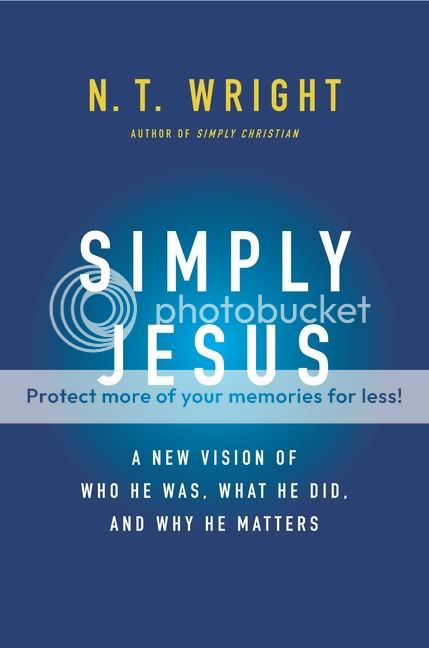
Review: N.T. Wright, "Simply Jesus"


Title:  Simply Jesus: A New Vision of Who He Was, What He Did, and Why He Matters
Author: N.T. Wright
Publisher: HarperOne
Genre: Christianity
Year: 2011
Pages: 240
Binding: Hardcover
ISBN13: 978-0-06-208439-2
Price: $24.99
There are a lot of great things I could tell you about N.T. Wright’s latest book Simply Jesus. I could praise the way Wright, former Bishop of Durham in the Church of England, clarifies Jesus’s claims about “the Kingdom of God” by situating him alongside Judah the Hammer, Simon the Star, Herod the Great, and Simon Bar-Giora–historical figures who, before and after Jesus, declared their kingdoms (105-117). I could analyze Wright’s seven-point typology of the Exodus as he depicts it playing out in the ministry of Jesus of Nazareth (63-66, 174-176, etc.). I could explain the way Wright challenges the notion that Jesus was simply a good moral teacher by placing Jesus’s actions and claims within their ancient cultural context, trying to discover what he thought he was doing based on the very Hebrew scriptures he quoted and enacted (166, 170, etc.). I could dissect Wright’s employment of key Old Testament texts regarding the coming Kingdom of God, texts which Wright views as crucial to understanding Jesus’s claims and various reactions to them (151-166). I could engage in debates about properly interpreting the identity of the “servant” in the book of Isaiah (153-158). I could even hook you in by outlining the interesting, often compelling ways Wright tries to answer questions like “Look out the window…If you think Jesus is already installed as king of the world, why is the world still such a mess?” (198).

Indeed, there is plenty of stuff in Wright’s latest book which makes for compelling review fodder. Instead of any of the above, I’ll describe the clever central metaphor Wright employs throughout Simply Jesus in order to paint “A New Vision of Who He Was, What He Did, and Why He Matters.”

Wright knows there has been a ton of debate about who Jesus was, who he believed he was, who others believed he was, and a host of other questions. Why write another book to add to the pile? Wright answers by employing a metaphor of “the perfect storm” (13). As the film of that title depicts, a fishing boat called the Andrea Gail was trapped between a cold front pushed in by a western wind on one side and a high pressure system coming from another direction–perfect ingredients for a huge storm. But a third factor, the left-overs from Hurricane Grace, swept in from the Atlantic to complete the perfect, that is utterly disastrous, storm. Wright uses this as an analogy for current debates about Jesus. The “high-pressure system” of conservative Christianity’s literalist biblical interpretations meets up with a “skeptical ‘western wind’,” which depicts Jesus as a man who wanted to teach good moral stories to people, or perhaps form a radical social program, all apart from heavenly direction (17-18). The third element is “the sheer historical complexity of speaking about Jesus” in the context of “first-century Palestinian Judaism,” the hurricane which completes the triple threat (20). Wright separates this third element from the second element: “the western wind of modernist skepticism and the eastern hurricane of historical puzzle are not the same thing” (22). This is his way of easing the minds of readers who believe serious scholarship is only a covert way of putting down religious faith (22). Rather than destroying faith, Wright understands careful historical and textual examination as the best way to demonstrate Jesus’s initial message, as well as his contemporary relevance.

Thus, context is king throughout Wright’s narrative of Jesus’s ministry, which is also framed using the “perfect storm” metaphor. Wright situates the trial and crucifixion of Jesus within the triple threat of pressure from the Roman Empire and the thousand-year-old expectations of Israel concerning deliverance from oppression, with God’s hurricane-like overriding plan executed through Jesus completing the ingredients (13-14; 151-152). In all of this Wright emphasizes Jesus’s Kingdom message, by which God’s will can be done on earth as it is in heaven. Wright emphasizes this theme over and over:
“First, it will not do to suppose that Jesus came to teach people ‘how to get to heaven.’ That view has been immensely popular in Western Christianity for many generations, but it simply won’t do. The whole point of Jesus’s public career was not to tell people that God was in heaven and that, at death, they could leave ‘earth’ behind and go to be with him there. It was to tell them that God was now taking charge, right here on earth; that they should pray for this to happen; that they should recognize, in his own work, the signs that it was happening indeed; and that when he completed his work, it would become reality” (144-145; see also 148, 184, 192, 194).
Reading Wright feels like curling up next to a fire on a dark, brisk night in a little cabin at the edge of the world. I’m not quite sure exactly why, but that’s how I feel when I’m reading Wright. I really like how he works with the New Testament. Here’s another excerpt:
“Layer upon layer it comes, dense and rich within the texts, echo upon echo, allusion and resonance tumbling over one another, so that for those with ears to hear it becomes un-missable, a crescendo of questions to which in the end there can be only one answer. Why are you speaking like this? Are you the one who is to come? Can anything good come out of Nazareth? What sign can you show us? Why does he eat with tax-collectors and sinners? Where did this man get all this wisdom? How can this man give us his flesh to eat? Who are you? Why do you not follow the traditions? Do the authorities think he’s the Messiah? Can the Messiah come from Galilee? Why are you behaving unlawfully? Who then is this? Aren’t we right to say that you’re a Samaritan and have a demon? What do you say about him? By what right are you doing these things? Who is this Son of Man? Should we pay tribute to Caesar? And climactically: Are you the king of the Jews? What is truth? Where are you from? Are you the Messiah, the son of the Blessed One? Then finally, too late for answers, but not too late for irony: Aren’t you the Messiah? Save yourself and us! If you’re the Messiah, why don’t you come down from that cross? [...] And Jesus had his own questions. Who do you say I am? Do you believe in the Son of Man? Can you drink the cup I’m going to drink? How do the scribes say that the Messiah is David’s son? Couldn’t you keep watch with me for a single hour? And finally and horribly: My God, my God, why did you abandon me? [...] The reason there were so many questions, in both directions, was that–as historians have concluded for many years now–Jesus fitted no ready-made categories” (167-168, emphasis in original).

One particular way Wright has tried to refresh the story of Jesus for the present tense is by creating his own New Testament translation: The Kingdom New Testament: A Contemporary Translation (San Francisco: HarperOne, 2011). It was released in October 2011 and can be had for around 20 bucks, a real steal. Without calling attention to the fact, Wright uses this new translation throughout Simply Jesus to great effect:

After six days Jesus took Peter, James, and James’s brother John, and led them off up a high mountain by themselves. There he was transformed in front of them. His face shone like the sun, and his clothes became as white as light. Then, astonishingly, Moses and Elijah appeared to them. They were talking with Jesus.
Peter just had to say something. “Master,” he said to Jesus, “it’s wonderful for us to be here! If you want, I’ll make three shelters here–one for you, one for Moses, and one for Elijah!”
While he was still speaking, a bright cloud overshadowed them. Then there came a voice out of the cloud. “This is my dear son,” said the voice, “and I am delighted with him. Pay attention to him.”
When the disciples heard this, they fell on their faces and were scared out of their wits. Jesus came up and touched them.
“Get up,” he said, “and don’t be afraid.”
When they raised their eyes, they saw nobody except Jesus, all by himself. (Matt. 17:1-8; Simply Jesus, p. 142; cf. Kingdom New Testament, p. 34-35)

Wright has a ton of books out there. You could just as well begin with any of them to find out if you’re interested in Wright’s typical approach. Many of them, including Simply Jesus, attempt to merge ”the academic and the pastoral” to educate and inspire a wider audience (ix). The book has a mere seven asterisk footnotes, includes several useful chronologies (62, 106, 108, 113) and highlights the poetic nature of Hebrew scripture verses through formatting. Oddly, Simply Jesus includes a handy scripture citation index but lacks a topical index. I guess I could criticize him for making yet another book on some of the same themes he’s discussed in previous books like Surprised by Hope (2008) and Simply Christian (2006). All his books cross paths with each other. At the same time, I once again found myself having fun with this latest effort, losing track of time in the pages. Wright overcomes overlap by providing fresh metaphors, using different biblical texts, and by referring the reader to his other work when too much content overlap looms. Simply Jesus showcases Wright’s characteristic wit and charm, his perceptive exegesis and theological biases, and his overriding sense of urgency for making Jesus better understood and thus more relevant in his ancient and our present contexts.

If you’re on the fence about this one, HarperCollins has a nice preview of the book available here. I reviewed Wright’s previous book (Scripture and the Authority of God) here. Given the choice between the two I’d start with Simply Jesus, although I enjoyed both books.


November 15, 2011

Review: Davis Bitton, “Knowing Brother Joseph Again: Perceptions and Perspectives”


Title: Knowing Brother Joseph Again: Perceptions and Perspectives 
Author: Davis Bitton
Publisher: Greg Kofford Books
Genre: Biography
Year: 2011
Pages: 197
Binding: Paperback
ISBN13: 978-1-58958-123-4
Price: $19.95 (Kindle, $9.95)
The fluidity of personality; the fallibility of perception; ambiguous memory construction; the happenstance instances of recording; the ravages of time. Just a few minor things to consider when trying to recall important events in my own life. And if I face such challenges regarding the things I’ve personally witnessed, how much more cautious should I be when dealing with history? With a particular historical figure? Named Joseph Smith. Who was he? So many different Josephs to choose from.

This is the general lesson LDS historian Davis Bitton hoped to convey in his book, Knowing Brother Joseph Again: Perceptions and Perspectives (Salt Lake City: Greg Kofford Books, 2011). In each of ten chapters, Bitton traces “how Joseph Smith has appeared from different points of view. It is the image of Joseph Smith rather than the man himself” Bitton seeks to uncover (ix). Beneath the “different, flickering, not always compatible views” of Smith, Bitton still maintains that “Joseph Smith was either a true, authorized prophet of God or he was not. In recounting his visions he either spoke the truth or he did not” (x). From this introductory statement I anticipated a book of pro et con arguments, but Bitton is able to present much more variety throughout the book.

Bitton begins with “Joseph Smith as Hero” and situates him “against the backdrop of nineteenth-century heroism” (1). Here Bitton draws on various “attribute” lists from other scholars and contrasts anecdotes about Smith with Andrew Jackson. In chapter two, “A Prophet—In the Book of Mormon,” Bitton locates scripture verses which seem to match instances from Smith’s biography, although he is careful to distance himself from certain scholars who “suggest that the book is only a reflection of Joseph Smith’s life.” (These include William D. Morain, Robert D. Anderson, and Dan Vogel, p. 25). Here Bitton also leaves open the possibility that the Book of Mormon’s “process of translation was sufficiently flexible that he used words and feelings of his own precisely at points where they were appropriate in describing other prophets who, human beings after all, had anticipated some of his experiences and emotions” (25-26). The next chapter carries the same approach through the rest of the LDS Standard Works, pointing out biographical similarities with various biblical figures including Abraham and Paul. Some of Bitton’s connections here are a little stretched, but he also shows how Smith himself and other Latter-day Saints up to the present have explicitly identified such parallels (27-40).

As a chapter, “In the Mormon Folk Memory” is a little weak on folklore analysis. Bitton proposes a loose “taxonomy” in which to situate various recollections of Smith, including human qualities, physical strength, miracles, doctrinal sayings, and prophecies. Here as elsewhere, Bitton briefly discusses problems historians face when analyzing such sources: “Anecdotes about Joseph Smith told in later generations are not, in and of themselves, a reliable source of Latter-day Saint doctrine…But rejecting all later testimony out of hand, perhaps on the grounds that the testifier is not available for cross-examination, is going too far” (54-55). He offers a weak rubric: “Many of the anecdotes ring true. If they can be pinned down close to the actual time and place they were supposed to have occurred, if they are consistent with the rest of what is known about the Prophet, and especially if there is confirmation from other evidence, they have credibility” (55). He also adds that such recollections are useful, if not for direct access to a reliable past, “then for [understanding] his popular image among his people” (55). The subsections on “prophecy” and “doctrinal sayings” and practice and policy” would make for fascinating study. Imagine a work which compares these with Islamic hadith, for instance.

Perhaps the most interesting chapter, and most representative of the entire collection, is “Joseph Smith and the Scholars” (115-135). It’s a narrative bibliography of scholarship on Joseph Smith, beginning with pre-academic attempts like Charles Mackay’s The Mormons, With Memoirs of the Life and Death of Joseph Smith (1852) and ending with various academic books and articles written in the 1990s. Knowing Brother Joseph Again is an updated version of Bitton’s earlier book Images of the Prophet Joseph Smith (Salt Lake City: Aspen Books, 1996). Hence my confusion when I read that Donna Hill’s 1977 Joseph Smith, the First Mormon "is perhaps the most satisfactory full biography yet to appear” (122). Richard Bushman’s Rough Stone Rolling and Dan Vogel’s Making of a Prophet are included in a footnote (133), and Bitton’s introduction identifies RSR as “the most thoughtful full biography” of Smith (1). Bitton passed away in 2007 before completing the manuscript, which was completed by Kofford Books under JoAn Bitton’s approval (publisher’s preface).[1] It isn’t clear which pre-2007 references were added by Bitton or the publisher. The footnote references are usually limited to the early 2000s with a few exceptions, which include multiple Kofford Books publications and the recent collection of Eliza R. Snow poetry published by BYU Studies.

Here, as elsewhere in the book, Bitton’s approach is somewhat uneven, switching between disinterested chronicler, open advocate, and devil’s advocate. His temperate assessment of Fawn Brodie’s Smith biography (“We do not agree with its conclusions and basic interpretation but think it silly to deny that it possesses positive qualities,” 120) is offset by a footnote dismissing John L. Brooke’s The Refiner’s Fire (“For my negative review of Brooke’s misguided polemic, which predictably was lauded by secular professional historians and current anti-Mormons, see BYU Studies…” 134). Moreover, Bitton’s footnotes don’t always point to the most up-to-date sources even for the time period in which he wrote. The chapter concludes with a brief list of roles Smith in which scholars place Joseph including politician, magician, mystic, psychopath, genius, and prophet (130).

He concludes this chapter by noting that “Most believing Mormons are unfamiliar with these scholarly reappraisals. To the extent that they might find such analyses convincing, however, they would simply insist on combining models…Cutting through to the heart of the matter, they are usually content to view Joseph Smith as a prophet” (130-131). Turning from this thought, Bitton’s epilogue reads a bit like an Andy Rooney piece (the more serious-themed ones, not the shopping lists/minor annoyance stuff). Here a historian sits back, reflecting briefly on the presuppositions and assumptions people, including himself, bring to Joseph Smith. More specifically, he outlines an “undisclosed syllogism” which he believes people always employ when considering the question of whether Joseph Smith was a “prophet,” as opposed to having strictly academic concerns: “Major premise: a true prophet would not do X. Minor premise: Joseph Smith did X. Conclusion: Joseph Smith was not a true prophet…Such logic is indeed airtight, but the conclusion is embedded in the rigid definition of the major premise” (139-140). As a historian, Bitton notes, he can only go so far with the methodological tools available.[2] But as a believer, he hopes for more:

“Back in the days…before the flattening of our reality into a stark, naturalistic, horizontal plane, there used to be a name for the leap, the signing on to something magnificently demanding and all-encompassing, the living out of something as if it were true, the growing conviction of the reality of things hoped for, things unseen. It used to be called faith” (140).

Bitton didn’t seek to be exhaustive in this book, although he included a 33-page “Select Bibliography” as of November 2005 (143). It includes references to primary sources, books, articles, theses, dissertations, church magazines, and unpublished papers specifically covering Joseph Smith. For Smith aficionados there isn’t much new in this volume, and it certainly isn’t Bitton’s magnum opus. Bitton’s is a thought-provoking, if uneven, overview of various ways Joseph Smith has been known by others during his own lifetime up to the present day. I’d certainly feel comfortable recommending this book to those members of the Church who—only being familiar with the version of Joseph Smith depicted in official Church publications and films—would profit from a more complex view of the prophet.


______________________________________________

Footnotes:

1. See James B. Allen, “Davis Bitton: His Scholarship and Faith,” FARMS Review Vol.19 No. 1 (2007): 1—8, for a tribute to Bitton.

2. For an interesting discussion about methodological considerations when dealing with religion in academic research, see “Finding the Presence in Mormon History: An Interview with Susanna Morrill, Richard Lyman Bushman, and Robert Orsi,” Dialogue, Interviews and Conversations, June 4, 2011.

November 11, 2011

Review: Stephen Carter, "What of the Night? Personal Essays"


Periodically, (usually when a collection is published) we see reflections on the literary genre of the "personal essay" in Mormonism. Here's mine. The footnotes provide links, which themselves provide further suggestions on the subject if you're interested. 

Title: What of the Night? Personal Essays
Author: Stephen Carter
Publisher: Zarahemla Books
Genre: Personal Essay
Year: 2010
Pages: 168
Binding: Paperback
ISBN13: 978-0-9843603-1-4
Price: $14.95 (Kindle, $2.99)

Having grown up Mormon I can’t remember a time when I didn’t know what a “testimony” was. Like breath, sleep, and family, testimony’s a natural part of my life. The genesis is lost to me, but I can remember instances when my conception of “testimony” was sharpened. As a kid in Primary I learned that a testimony ought to be a list of things I know are “true,” and these things were all things I’d learned about at Church. Usually us Primary kids would also sneak a few extra things onto the end of our testimony lists, like the fact that we loved our brothers and sisters and dads and moms. As I got a little older I learned we could include a personal experience or two in our testimonies. I usually enjoyed listening to these ones a little more, but the list still came at the end as it should; the general thrust of testimony remained the same.

This changed a little when a seminary teacher parsed different ways we “bear” our testimony. He said we bear it by speaking it out loud, but he mentioned a few new things for me to consider. First, “bearing” testimony can also simply refer to the way we are, the way others see us. Jesus said to be the light of the world, so we bear our testimonies by loving and serving others, he said. Then he said sometimes we have to “bear testimony” as a burden—we have to bear the weight of it, bear up under the everyday struggles of life in faith. Jesus said to take up our crosses and follow.

Several years later this latter sense of “bearing testimony” came to mind as I read a personal essay by Eugene England called “The Mormon Cross.”[1] It was written prior to 1978, before the LDS priesthood was finally extended again to blacks, and England bore witness in this last sense, and said the Church itself bore the weight of a cross he hoped would someday be lifted. And in some ways that particular cross has been lifted, but when England wrote it he was still bearing up under great weight. That seems to me to be the predominant characteristic of current Mormon personal essays, which can be found in practically every LDS-themed publication—Dialogue, Sunstone, Segullah, even BYU Studies. Such essays, like England’s, relate personal stories including personal reflection, but not necessarily ultimate resolution as we typically read in official church publications like the Ensign. “Essay,” which I’m told comes from the French essayer, means an attempt.[2] Swimming deep in the perplexity rather than floating high above in the omniscient cloud, is the object. This is another way Mormons testify, and I'm happy we have independent publishers like Zarahemla Books to provide more outlets for testimony. (Minor complaint: I thought the font—large and typewriterish—distracts from the feeling the pieces are meant to evoke. The cover design is cool, though.)

The roots of this latter-day way of bearing testimony are said to run deep. In the Encyclopedia of Mormonism Donlu DeWitt Thayer points out that the current literary form of LDS personal essay was absent in the early days of the Church, despite the proliferation of written diaries and sermons. “By the middle of the twentieth century, however,” she writes, “the Church was essentially at peace with its external surroundings, and a few LDS writers opened the era of the Mormon personal essay.”[3] It’s interesting to think of such personal essays as fruits of the environment in which they grow, with all the influence that entails. Today’s best Mormon personal essays, according to Eugene England, are “rooted in the extremes of honestly revealed feeling and experience, from doubt and inadequacy and anguish to exalted faith and love and encounters with divinity.”[4]

It’s been about a decade since England passed away, but his description of the personal essay still holds up, even in a personal essay written about him, as found in Stephen Carter’s recent collection of personal essays, What of the Night? In “My Brief Tour of England: My Year With Gene,” Carter gives his first-hand account of being England’s office assistant (11-25). Constant phone calls and busy work under Gene’s command are offset by hugs and prayers, and later, cancer, confusion and death. Inspired by England, Carter has become a powerful personal essayist in his own right. In addition to completing an MFA and PhD from the University of Alaska—Fairbanks, Carter, current Sunstone editor, has won multiple awards from the Eugene England Personal Essay Competition.[5] His work was included among the “Best American Spiritual Writing” in 2006.

In this collection Carter seems to dwell slightly more often on the “doubt and inadequacy” side of England’s description as opposed to the “exalted faith and love” side, although his main aim is to “dwell in the tensions” (29). “The Weight of Priesthood” is a masterful rumination on his shifting understanding of the power of the priesthood (33-62). Several essays, in addition to the one about England, deal with death. In “Last Supper” (91-96) he tells the story of a couple killed by a drunk driver, and his prose sings: “Outside, the snow was frozen to the ground; the streets black and slick with ice, reflecting the glow of the streetlamps. Wayne and Elaine have left a centuries-old station wagon, a house with bread and milk still in the fridge, credit-card offers in the mailbox, and maybe no will” (93).

Negotiating relationships between those who leave the church and those who remain is another recurring theme. “The Departed” (115-130) laments for promising members who leave the Church, “Writing As Repentance” includes responses from friends who wonder how Carter can write what he writes and still care to remain Mormon (159-168). But “Smoke and Mirrors” pulled me in more than any other essay on this theme, from the first sentence, too: “Sometimes revelation works through a void. Like the day I realized that I knew next to nothing about my little brother” (62). I can’t relate the strength of this essay in a review, and I can’t spoil the ending, but it really resonated with me. Anyone who knows close family members or friends who have left the Church will find much to identify with here.

Back in 2008 Carter popped up in an online discussion about personal essays. He described his overall reason for writing. I’ll close the review with his description because I think it captures quite well what Carter tries to do in What of the Night? These are essays without many neat endings. Plenty of reflection without much ultimate resolution. But Carter bears his testimony throughout the collection, his testimony of the plan of salvation; the messiness and the hope:

“The essays I’ve published have taken months of my life. Ernest Hemingway’s quote: ‘Writing is easy. You just sit at the typewriter and bleed’ sums up my experience well…The reason to put writing in front of a lot of people is to say, “Here’s something I’ve thought a lot about. I’ve followed a line of thought (or an experience) through difficult territory. I’ve questioned myself; I’ve made false starts and hit dead ends. It’s taken me some time to find a way out the back of conventional wisdom and maxims to find something that resonates deeply with me. I know that you haven’t had my experience or followed this path, so I’m going to do my utmost to communicate it to you.”[6]
It's clear that Carter is doing a little more than just communicating his own experiences, though. This is where Mormon testimony bearing is most obvious in his approach. The fact that the essays most often include a message, a take-away, however implicit, indicates that he hopes his stories demand something of the reader, too. He doesn't always pull this off successfully, and I wasn't always convinced that a given point was true to my own experience in Mormonism. But that's because much of the time Carter is trying to figure out, even while expressing, his own place in Mormonism. And the bearing of such testimony seems very Mormon to me. I'm glad Stephen's still here.

__________________________________

Footnotes: 

[1] Eugene England, "The Mormon Cross," Dialogue: a Journal of Mormon Thought, Vol. 8:1 (Spring 1973), 78-86. England's book Making Peace has some great stuff too. It's available for free at Signature's online library.

[2] Kris Wright, “An Eye For an I: Looking at the Personal Essay in Mormon Literature,” bycommonconsent.com, 6 February 2006.

[3] “Literature, Mormon Writers of: Personal Essays,” in Daniel H. Ludlow, ed., The Encyclopedia of Mormonism, 5 vols. (New York: Macmillan, 1992).

[4] Wright, ibid.

[5] I believe this contest has since been renamed as the Charlotte and Eugene England Personal Essay contest through Irreantum.

[6] Comments section of Kristine Haglund, “Goldilocks and the Art of the Personal Essay,” theredbrickstore.com, 18 December 2008.